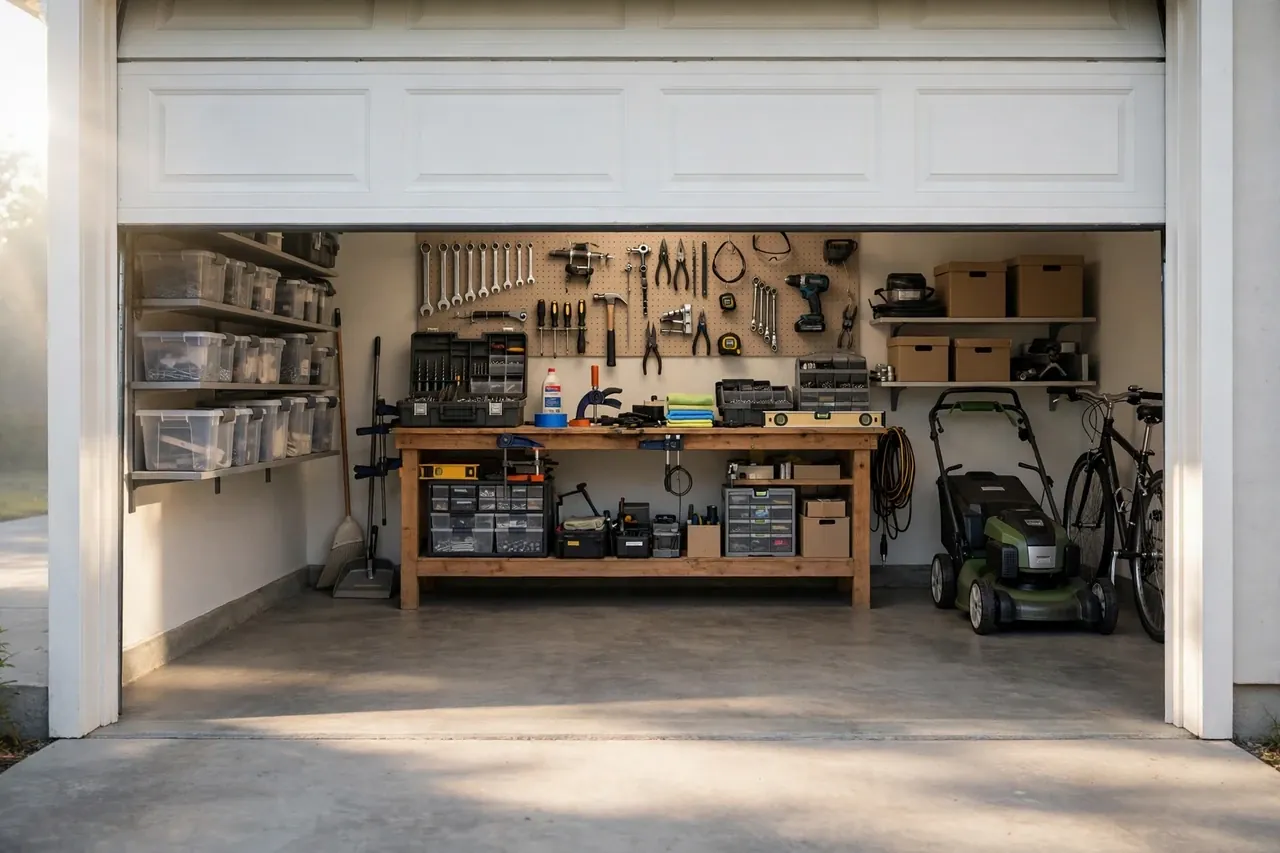
Garage Door Opener Repair & Installation
Garage Door Opener Repair & Installation in Zion, IL
The opener is the motor, the drive, the controls, and the safety sensors working as one system. This page covers opener repair, opener installation, and smart and Wi-Fi upgrades together, because the real question is usually whether to fix the opener you have or fit a new one. Milwaukee Garage Doors Inc is open 24 hours, every day, at (224) 842-7761.
Service overview
What Garage Door Opener Repair in Zion, IL Really Involves
An opener is more than the motor unit on the ceiling. It includes the rail and drive that move the door, the logic and controls that set travel and force limits, the remotes, keypad, and wall control, and the photoelectric safety sensors and auto-reverse function that stop the door from closing on an obstruction. A fault in any one of those parts can look like a fault in another: a door that reverses may have misaligned sensors, a binding track, or a spring that no longer counterbalances the door, so diagnosis starts with the symptom, not the part.
This page treats repair, installation, and smart and Wi-Fi upgrades as one decision, because the question is usually whether to fix the opener you have or fit a new one. It also covers remotes and keypads, sensors and auto-reverse, and the motor, chain, and belt as parts of the opener system, rather than as separate services. Opener age cannot be read from house age alone, since openers are routinely replaced independently, but homes in Beulah Park and Joanna, with 1960s housing stock, and in 1990s subdivisions such as Harbor Ridge and Sunset Ridge, may still carry openers from earlier decades alongside newer replacements.
The repair-or-replace decision
Repair or Replace Your Garage Door Opener?
There is no single age or fault that settles this decision. The factors below are the ones general guides list; the opener's actual condition, parts, and safety features decide the answer in each case.
When repair is the first thought
A single failed part, such as a sensor, a remote, a gear set, or a belt, with the rest of the opener working well, is the usual repair case. If the door itself is balanced and the safety features test correctly, fixing the failed part leaves the system as it was. Ask what failed, and what else was checked, before deciding.
When replacement is the first thought
Repeated failures, a motor that hums but cannot move a balanced door, missing or failed safety features, and an opener so old that parts are hard to find are the usual replacement cases. Guides also note that openers made before modern safety standards may lack features current rules require, which is a safety reason to consider replacement rather than repair.
Safety features decide more than age
Federal rules (16 CFR Part 1211, UL 325) require residential automatic garage door operators to have entrapment protection: an inherent reversal system plus a secondary entrapment protection device (such as photoelectric sensors or an edge sensor) or a constant-contact control. An opener whose sensors or auto-reverse cannot be made to work correctly is a safety problem regardless of its age. Test sensors and auto-reverse regularly, and treat a failed test as the deciding factor.
A new door, a new opener?
A new door does not automatically need a new opener, and a new opener does not automatically need a new door. The opener must be able to lift and control the door it is paired with, and its safety features must work with that door. When both are being considered together, see garage door installation and replacement in Zion, IL for the door side of the decision.
What a Visit Typically Involves, in General Terms
How an Opener Repair or Installation Visit Works
Five steps, in order, whether the opener is being repaired or replaced. Diagnosis comes first, safety tests come last, and the door's balance is checked either way. That sequence is general-guide language: the exact sequence for any visit is not asserted here as this business's sequence, and the contents of a visit are established on the call.
STEP 01
Describe the symptom
The call starts with what the opener is doing: humming with no movement, reversing, blinking lights, a remote that works only up close, or a door that opens by itself. The symptom points to the motor, the drive, the controls, the sensors, or the door itself, and it decides what not to do in the meantime.
Drive types
Opener Drive Types: Chain, Belt, Screw, and Jackshaft
Chain drive
A chain moves the door along the rail. Chain-drive openers are the long-established type in guides, described as sturdy and widely fitted. Noise is the consideration guides name most often: a chain is typically louder than a belt. Consider chain drive where the garage is detached or noise matters less.
Belt drive
A belt, usually rubber or reinforced, moves the door along the rail. Guides describe belt-drive openers as the quieter option, which is why they are often discussed for attached garages with living space above or beside them. Consider belt drive where quiet operation matters most.
Screw drive
A threaded rod rotates to move the door along the rail, with fewer moving parts than a chain or belt system. Guides describe screw-drive openers as a distinct mechanism, not as a variant of chain or belt. Ask about upkeep and cold-weather behavior before choosing, since the mechanism differs from chain and belt.
Jackshaft, or wall-mount
A jackshaft opener mounts on the wall beside the door and drives the torsion shaft directly, leaving the ceiling clear. Guides discuss it where ceiling space is tight or a high ceiling makes a rail opener awkward. It is a different mounting idea, not a different drive in the same housing, and it suits torsion-spring doors.
Horsepower and lifting power
Openers are rated by lifting power, and guides discuss matching that rating to the door's weight and size: a heavier or larger door needs more lifting power than a light single door. No rating is recommended here, because the door's weight, balance, and spring condition decide what is needed. An opener cannot compensate for a door that is out of balance.
Rail length and door height
The rail must match the door's height and travel. A taller door needs a longer rail, and a rail set for the wrong height leaves the door short of fully open or fully closed. Rail length is part of the fitting decision, not an afterthought, and it is settled when the opener is chosen.
Battery backup
Some openers include a battery that lets the door operate during a power cut. No Illinois battery-backup mandate for garage door openers was found, so battery backup is a feature choice, not a legal requirement. Ask whether a given opener includes it, and how it behaves when the power returns.
Openers and door balance
Every drive type assumes a balanced door. If the springs no longer counterbalance the door, any opener strains, and fitting a stronger opener does not fix the underlying problem. Balance is checked by hand with the opener disconnected before an opener is judged or replaced. See garage door spring replacement in Zion, IL.
Openers in detached garages
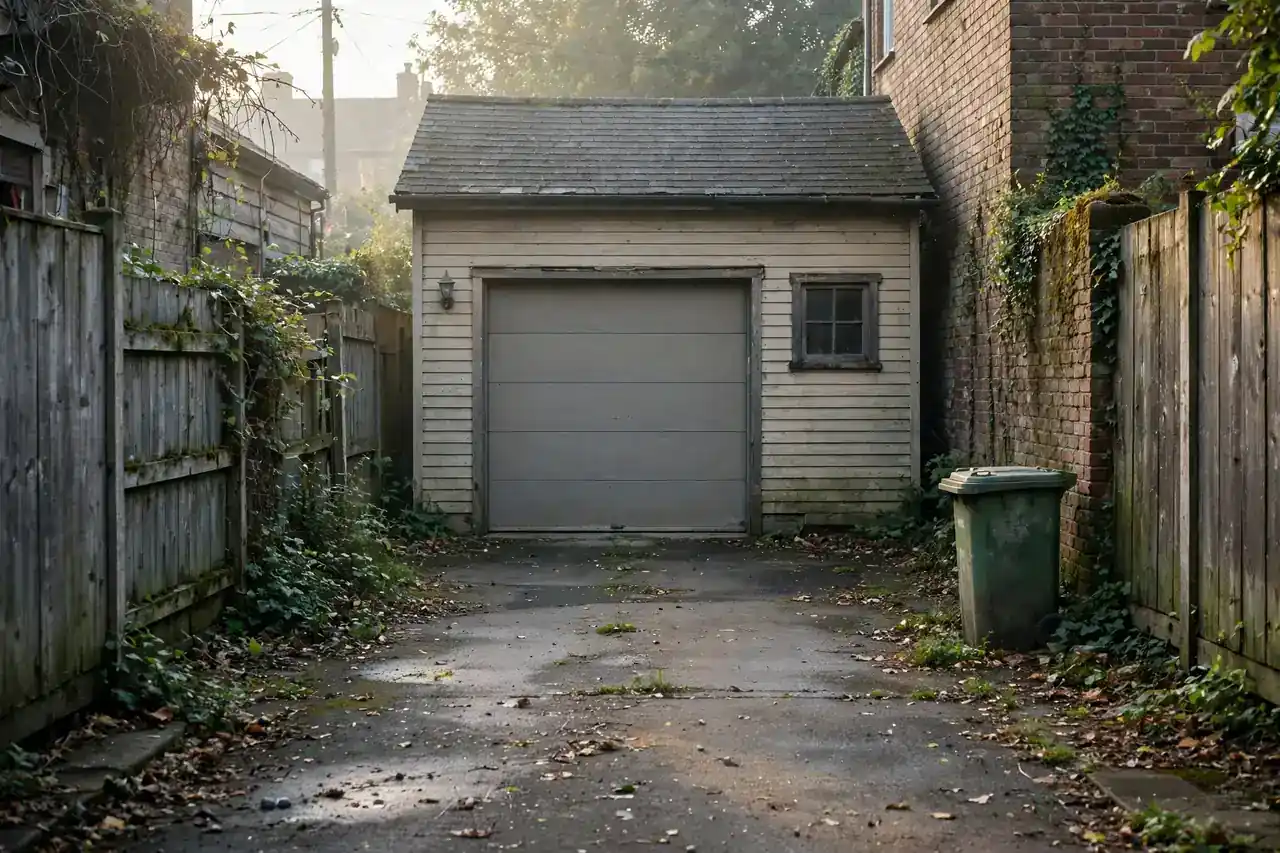
A detached garage raises its own opener questions: the power supply to the garage, the distance for remotes and any smart features, and security for a door that faces an alley rather than the street. Alley-loaded detached garages are characteristic of Zion's older grid, including Central Zion and Kedron Park.
Openers in attached garages
An attached garage raises different questions: noise traveling into living space, insulation around the opener and door, and smart features used from inside the home. The 1990s and 2000s subdivisions of West Zion, Sunset Ridge, and Cypress Park are attached and garage-forward in pattern, where those questions come up most.
Choosing between drive types
There is no single best drive type. Noise, ceiling space, door weight and height, and budget shape the choice, and the opener must pair with the door and springs it will run. Ask how each type behaves with your door's size and balance, and what upkeep each one needs, before deciding.
Smart upgrades
Smart and Wi-Fi Opener Upgrades
What a smart upgrade means
A smart or Wi-Fi opener can be checked and operated from a phone, can send alerts when the door opens or closes, and can show whether the door is open or shut from away from home. Those are the functions guides describe. Whether a given opener supports them, and how, depends on the opener and its controls, not on the phone alone.
Upgrade the opener, or add to it?
Some openers can be upgraded to Wi-Fi control without replacing the whole unit, and some need a new opener. Compatibility is the deciding factor: the opener's make, model, and age, and whether its controls accept the addition. Ask whether your existing opener can be upgraded, and what would need to change, before assuming either answer.
Compatibility questions to ask
Ask whether the upgrade works with the opener you have, whether it needs a home Wi-Fi signal that reaches the garage, and whether it changes how the wall control, remotes, and keypad work. Ask too whether unattended closing features, if any, are limited to sectional doors, as guides warn. No platform, app, or smart-home system is named on this page, because none has been confirmed for this business.
Smart features and safety
Smart features do not replace safety features. Sensors and auto-reverse must work whether the door is operated from the wall, a remote, or a phone, and a door that reverses or will not close needs the same diagnosis as any other opener fault. See the sensor section on this page, and the safety checks in the questions below, before treating a smart upgrade as a fix for a faulty door.
Local execution
Sensors, Auto-Reverse, and Opener Safety in Zion
Safety features are part of the opener system, not an add-on. The cards below explain what they do, what their failure looks like, and how they are tested, with the Zion area patterns that affect opener age and access.
Photoelectric safety sensors
Small photo-eye units at the base of the tracks, facing each other across the opening. If the beam between them is broken while the door is closing, the door stops or reverses. Misalignment, an obstruction, dirt or ice on a lens, and wiring problems are the causes guides name. Keep the lenses clean and the path clear, and do not bypass the sensors.
Auto-reverse on contact
If the closing door meets an obstruction, the auto-reverse function reverses it. Federal rules (16 CFR Part 1211, UL 325) require residential automatic garage door operators to have entrapment protection: an inherent reversal system plus a secondary entrapment protection device (such as photoelectric sensors or an edge sensor) or a constant-contact control. Test sensors and auto-reverse regularly: a door that does not reverse on contact has a safety problem, not a convenience problem.
Force and travel limits
Force limits decide how hard the opener pushes before giving up, and travel limits decide how far the door goes in each direction. Limits set wrongly can make a door reverse for no visible reason, or fail to close fully. Limit settings vary by make and model, so no settings are published here: the opener's manual for its model is the reference.
Blinking lights and what they mean
A blinking sensor light or a flashing opener light usually means misalignment, an obstruction, or a wiring problem. Diagnostic flash patterns vary by make and model, so this page publishes no blink-code table. Check for obstructions and misalignment first, and refer to the manual for the pattern your opener shows.
Holding the wall button down
A door that only closes while the wall button is held down is usually showing a sensor fault: the hold-to-close behavior is an override, not a fix. Do not treat holding the wall button down as a routine solution, and do not leave the door in that state. The sensor fault needs diagnosis, not a workaround.
Openers in the older grid
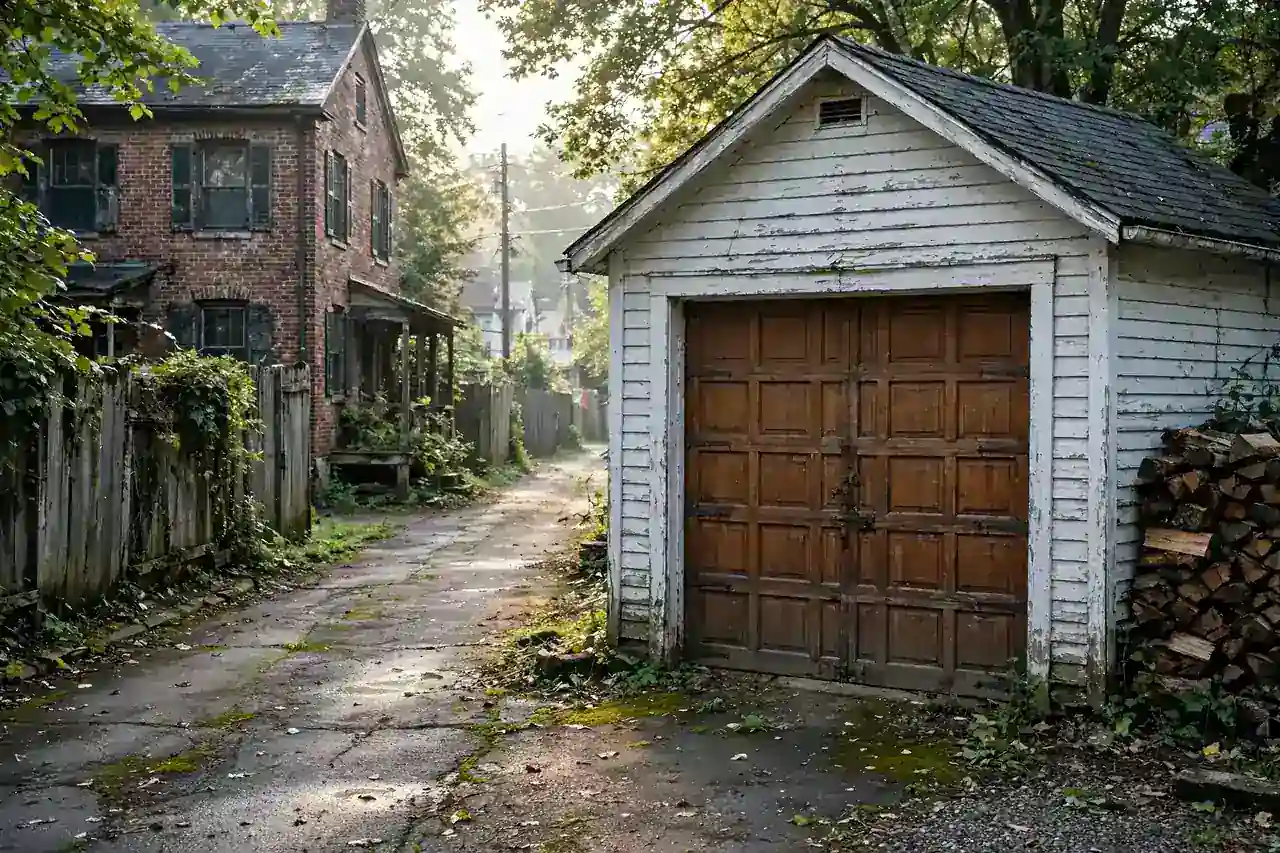
Alley-loaded detached garages in Central Zion, South Central Zion, and Kedron Park raise opener questions about power supply, remote range, and rear-access security. Older openers in these areas may predate modern safety features, which is a reason to test sensors and auto-reverse rather than assume they work.
Openers in the western subdivisions
Attached, garage-forward homes in West Zion, Harbor Ridge, and Sunset Ridge carry original openers from the 1990s and 2000s build waves, now two to three decades old, where they survive, depending on the subdivision. Age alone does not condemn an opener, but safety features from earlier decades deserve the same regular tests as any other opener.
The opener's parts
Remotes, Keypads, Motors, Chains, and Belts
The opener's parts, as one system. Remotes and keypads are the controls you touch; the motor, chain, and belt are the parts that move the door. All of them live on this page, not on separate pages.
Remotes: battery, range, and programming
A remote that works only up close, works intermittently, or stops working while the wall button still works points to battery, programming, range, or lock mode. Check the battery first, then whether the opener is in lock mode, then whether the remote needs reprogramming for its model. No model-specific steps are published here: the manual for the opener's model is the reference.
Keypads: battery, codes, and lockout
A keypad that blinks, will not open the door, or stops responding points to battery, reprogramming, or lockout after repeated wrong entries, in the framing guides use. Like remotes, keypads are model-specific: the manual for the opener's model, not a generic guide, is the reference for codes and programming.
Motors and gears: humming, straining, and giving up
A motor that hums but does not move the door, strains audibly, or trips out partway through a cycle may have a gear or motor problem, or it may be fighting a door that is out of balance or a spring that has broken. The door is checked before the motor is condemned. See garage door spring replacement in Zion, IL for the spring side.
Chains and belts: noise, slack, and wear
A chain or belt that is worn, slack, or damaged shows up as noise, jerky movement, or a door that hesitates. Chain and belt replacement is opener-system work, covered here rather than on its own page, because the drive, the rail, and the limits are set together. A noisy drive is not always a worn drive: rollers and tracks make noise too, and the garage door off-track, cable and roller repair page covers that side.
Practical Guidance for Homeowners.
Clear planningReady for Zion HomesCareful workLocal Company
Codes and safety
Codes and Safety in Zion
Opener work in Zion sits under city-adopted building codes and federal safety rules for automatic operators, which are the rules that require the sensors and auto-reverse described on this page. The five points below state what was confirmed on primary sources and what was not, and they are the only code, permit, and licence statements this page makes.
- Zion has adopted the 2021 International Building Code and 2021 International Residential Code, effective January 1, 2025, with local amendments.
- Illinois does not issue a statewide licence covering garage-door work; the only general building-trade contractor licences issued statewide are for roofing and plumbing. Whether City of Zion contractor registration applies to garage-door contractors was not confirmed — ask the City of Zion Building Department.
- Federal rules (16 CFR Part 1211, UL 325) require residential automatic garage door operators to have entrapment protection: an inherent reversal system plus a secondary entrapment protection device (such as photoelectric sensors or an edge sensor) or a constant-contact control. Test sensors and auto-reverse regularly.
- No Illinois battery-backup mandate for garage door openers was found.
- Whether a City of Zion permit is required for garage-door work, and any fee, was not confirmed on a City source. Contact the City of Zion Building Department, 2828 Sheridan Road, (847) 746-4018, before work begins.
Where we work
One local team. A lot of ground covered.
Central ZionSouth Central ZionBeulah ParkJoannaHermonKedron ParkWest ZionHarbor RidgeShepherds CrossingLorelei AcresStonebridge CrossingSunset RidgeCypress ParkCountrywood HillsBrighton PondsButterfield PlaceWestside HillsHighland MeadowsSheridan HillsSheridan LakeSheridan Lake ViewBartletts North Shore Acres
View all Zion areas Notes from local customers
What Zion Customers Say
The crew was proficient and competent, and they made my garage seem better than before.
Premium components were used to rebuild my garage door for reasonably low running cost.
I had a thorough safety check on my garage door, the technician was very detailed.
Before the visit
Frequently Asked Questions About Opener Repair in Zion
Still wondering?(224) 842-7761
Repair is the first thought when a single part has failed and the rest of the opener works well, with safety features that test correctly. Replacement is the first thought with repeated failures, a motor that cannot move a balanced door, missing or failed safety features, or an opener so old that parts are hard to find. Safety features decide more than age: an opener whose sensors or auto-reverse cannot be made to work correctly needs attention regardless of age.
Chain-drive openers move the door with a chain along the rail, and guides describe them as sturdy and louder. Belt-drive openers use a belt and are described as quieter. Screw-drive openers use a rotating threaded rod, with fewer moving parts. Jackshaft openers mount on the wall beside the door and drive the torsion shaft directly, leaving the ceiling clear. No single type is best: noise, ceiling space, and door weight and height shape the choice.
It depends on compatibility. Some openers can be upgraded without replacing the whole unit, and some need a new opener. The opener's make, model, and age, and whether its controls accept the addition, decide the answer, along with whether a home Wi-Fi signal reaches the garage. No platform or smart-home system is named on this page. Ask whether your existing opener can be upgraded before assuming either answer.
Most often, the safety sensors or the force and travel limits are involved: a misaligned sensor, an obstruction in the beam, dirt or ice on a lens, a wiring problem, or limits set wrongly can all make a door refuse to close or reverse after closing. Blinking sensor or opener lights usually mean the same set of causes. Diagnostic flash patterns vary by make and model, so the opener's manual is the reference for the pattern yours shows.
That distinction points to the remote or keypad rather than the opener itself. Battery, programming, range, and lock mode are the usual causes for a remote, and battery, reprogramming, and lockout are the usual causes for a keypad. Check the battery first, then whether the opener is in lock mode. Remotes and keypads are model-specific, so the manual for the opener's model is the reference for programming steps.
Sensors, auto-reverse, and force and travel limits are typically checked after an opener repair or installation. Federal rules (16 CFR Part 1211, UL 325) require residential automatic garage door operators to have entrapment protection: an inherent reversal system plus a secondary entrapment protection device (such as photoelectric sensors or an edge sensor) or a constant-contact control. Test sensors and auto-reverse regularly, and treat a failed test as a safety problem. The door is also run through full open and close cycles, and its balance is checked.
Keep exploring
Related Services
Open 24 hours, every day
Need Help With Your Garage Door Opener in Zion?
Call (224) 842-7761 to reach Milwaukee Garage Doors Inc. Describe what the opener is doing: humming, reversing, blinking, or ignoring the remote. We are open 24 hours, every day.
Start with the basics
Call Milwaukee Garage Doors Inc
Reach Milwaukee Garage Doors Inc at (224) 842-7761 for garage door opener repair and installation in Zion, IL. We are open 24 hours, every day, and the phone is the way to reach us. Tell us what the opener is doing, and we will go from there.